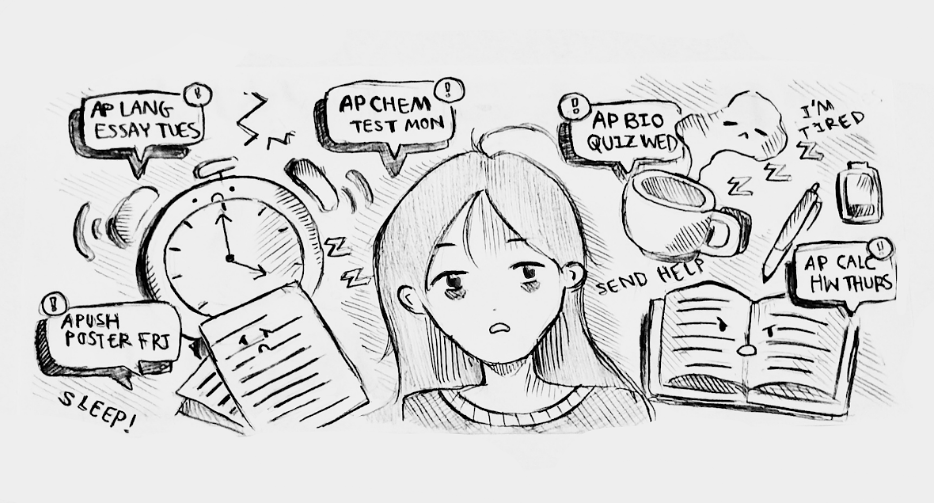


The phrase “If the due date is not today, it is not being done today” has become a quiet mantra around WCHS. Students often wait until the last possible moment to finish assignments, balancing procrastination with sports, extracurriculars and other responsibilities. Over the past few years, however, WCHS has gradually moved away from deadline policies that allowed work to be submitted late without any penalty. While these changes have received mixed reactions, they have ultimately been a positive shift for students.
Two years ago, WCHS used a two-week deadline policy. Students had up to two weeks after the original due date to submit assignments and still receive full credit. Last school year, that window was shortened to five days. The concept remained the same, yet instead of two weeks, students only had five days from the due date to turn in their work. This year, the policy was changed again. If a student submits an assignment after the due date, 10% will be deducted. This rule applies only to All Tasks and Assignments, rather than Practice and Preparation work. Teachers determine the exact length of the deadline extension, though it cannot exceed five days.
Under the previous system, there was often little pressure to complete work by the actual due date. Without a real consequence for lateness, students had little incentive to finish assignments on time. This frequently resulted in in-class distractions and prolonged procrastination. Students would postpone assignments even when they were given time during class, knowing the work could be completed later in the week without any penalty. Over time, the learning environment that WCHS aims to create began to fade.
This behavior reflects a concept known as “student syndrome,” where individuals delay work until the final possible moment. The root of this pattern lies in a lack of urgency. When students have days or weeks to complete an assignment, the pressure to start often disappears until the night before it is due. Allowing additional days or weeks after the deadline only amplified this tendency, reinforcing a cycle of postponement.
What students sometimes overlook is that teachers carefully plan their schedules and assignments to build on one another throughout the week. When students save several assignments for the last minute, the workload piles up quickly. The cycle of procrastination continues, and students fall behind the intended pace of the class. When full credit is no longer guaranteed for late work, students have a stronger reason to stay on schedule. Completing assignments on time allows them to keep up with the class rather than constantly trying to catch up.
Seeing a 10% deduction in the gradebook may feel frustrating, but consequences are an important part of academic structure. In college, late work often results in grade deductions, if it is accepted at all. At a school like WCHS, where many students go on to highly competitive colleges, experiencing clear deadlines and accountability now can help cultivate stronger habits for the future.
Of course, not every WCHS student relied on the former system of extended deadlines. Many students consistently submitted work on time. Still, enough students delayed assignments that the policy shaped overall classroom behavior. The current policy, which includes a 10% deduction for late work, creates a stronger incentive to complete assignments when they are due.
When students keep pace with their classes, a ripple effect follows. They arrive prepared, participate more actively and engage more fully with the material. Staying on schedule leads to a stronger understanding of the topics being taught and ultimately supports better academic performance. In many ways, these benefits stem from a simple change: introducing real consequences for late work and reducing the procrastination that once defined the old system.