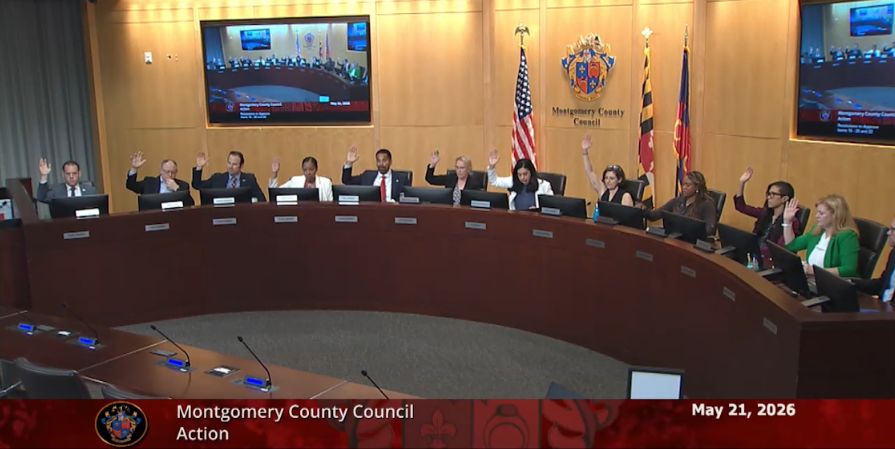

The 2025/2026 MCPS school year was plagued by unprecedented snowfall, disruptions and most importantly, dangerous complacency among Montgomery County leaders. MCPS students missed about five days of school due to extreme winter weather. In order to meet the in-school day quota of 180 instructional days, Montgomery County responded with rushed decisions, including scheduling school on the Muslim holiday Eid al-Fitr, which was quickly repealed after widespread backlash from families. However, even bigger problems lie in the planning for the 2026/2027 school year calendar, which was finally voted upon on April 30, 2026.
“Making changes four months before the start date, when families have already made plans for the summer, would be extremely unfair, ” Board of Education candidate Fred Di-Resta said. “Part of being a public servant is actually serving the public. In this instance, the people spoke.”
The plans for the 2026/2027 school year include several changes, such as starting the year five days earlier, on August 20 for most students instead of August 25, with August 19 serving as a transition day for some grades and new students. Unlike the rushed proposal to schedule an instructional day on Eid al-Fitr, this plan places inclement-weather makeup days after the last scheduled day of school, despite conflicting with the State Board of Education’s resolution, except for a makeup day on December 23. If MCPS experiences two or more closures, the school year will be extended into the week following the last scheduled day of school, June 11.
“I think that school systems need to have contingency plans in place so that if the schedule needs to be changed, we are already aware of what will happen so that we can at least have an idea of the days we might be in school,” WCHS junior Kari Oskvig said. “Making unexpected changes is not always appreciated as us students also have plans and a life outside of school that are impacted by the changing of the school schedule.”
Oskvig’s sentiment is common among MCPS students. Part of the problem with the original calendar changes was the spontaneous nature of it. For many students and families, summer plans and camps have already been paid for. With the school year scheduled to begin five days earlier, on August 20th, there may not be adequate time for plans to be rewritten, forcing families to decide between summer activities and five essential introduction days for the school year.
“It is important to allow people to practice what they believe in and not restrict them in any of their practices,” Di-Resta said. “It is unfair to the students and families of MCPS to have to sacrifice school for religion or the other way around.”
One of the main issues contested in the original plan was the use of numerous religious holidays as makeup days, or even converting them to instructional days. These holidays would include Yom Kippur on September 21, Diwali on November 9, Eid al-Fitr on March 9 (also a professional day), Passover on April 22 and Eid al-Adha on May 17. The county reached out to the community for input on these plans, and unsurprisingly received almost immediate backlash, with a common theme being that students should not have to miss school in order to celebrate a religious holiday.
“I do give MCPS credit for reaching out to families to get their input on the decision-making,” Di Resta said.
The controversy also raised broader questions about how MCPS balances instructional requirements with the needs of a diverse community. To gain community input, MCPS issued the Necessary Adjustments for the 2026–2027 School Calendar form and an opinion article in the Bethesda Today magazine, which served as a call to the community to complete the form. While many families appreciated being asked for their perspective, the strong backlash also suggested that outreach alone was not enough; for many in the community, the issue was whether that feedback would influence the final decision.
“We have other aspects of our lives outside of school, and they are ignoring those and making them seem less superior to MCPS,” Oskvig said. “They are not respecting the balance we need in our life between school, religion and a social life in general. This whole debate just goes to show how they [do not] seem to understand who their students are outside of school, and also it goes to show that more action might be needed by the students, other than the SMOB, to show MCPS what we need.”