

“No school for two weeks,” or at least that is what everyone thought. For many Americans, those words signified the start of another global pandemic. What started off as temporary school closures and the rescheduling of events, abruptly transformed into months of uncertainty, virtual learning, isolation and a complete rebrand of daily life. From 2020 to 2023 face masks, the “6 feet apart” rule and major economic problems overtook everyone’s lives. This experience left many people with the same reaction whenever an unfamiliar disease appears in the news: Could this happen again?
On May 2, the Centers for Disease Control and Prevention (CDC) issued a health alert about an outbreak of the Andes hantavirus aboard the M/V Hondius cruise ship. Hantavirus is a rare, but lethal family of viruses spread primarily by wild rodent feces, such as mice and rats. Humans contract the virus by inhaling airborne particles from infected rodent urine, droppings, or saliva. Although many hantavirus strains are not able to be transmitted from humans, the Andes strain can transmit through prolonged close contact and exposure to a sick person’s body fluids.
“I first heard about hantavirus when I was watching the news with my family at the dinner table,” said WCHS sophomore Noor Rekhi. “My first thought was Covid because that is the last major disease outbreak most people of age remember. I wanted to know how serious it was and whether it could spread beyond the cruise ship or more specifically to the U.S.”
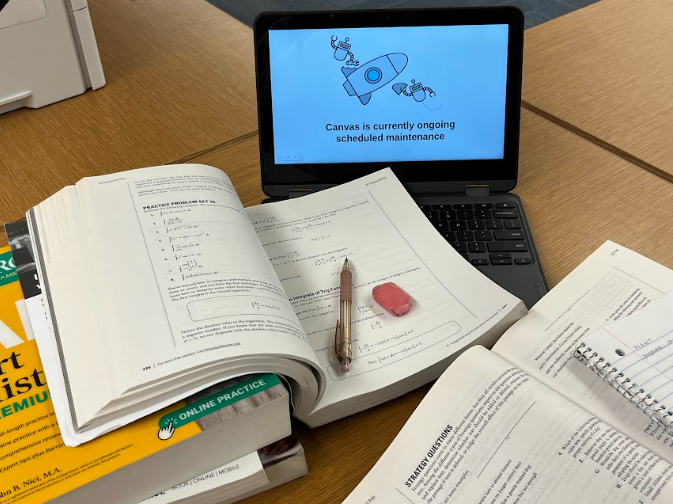
The hantavirus outbreak came six years after the start of the Covid-19 pandemic, which led to widespread school closures all over the country. In MCPS, the pandemic resulted in a year and a half of virtual instruction and long-term changes to emergency preparedness. In addition, recently MCPS created a new virtual learning policy that allows virtual instruction to count toward Maryland’s required 180-day school year during extended or emergency closures.
“A lot of students remember how quickly Covid changed everything, so when another disease, like hantavirus, is seen on the news, many panic,” said WCHS sophomore Sophie Finkelman. “Covid taught people not to ignore public health news. Even though hantavirus is different, it gets people’s attention because of what happened in 2020.”
Health officials have repeatedly emphasized that the Andes strain involved in the M/V Hondius outbreak spreads differently than Covid-19. According to the World Health Organization, transmission of the virus requires close and prolonged contact until respiratory viruses, unlike Covid-19, which spread extremely easily. For many students at WCHS the distinction between hantavirus and Covid-19 is significant. The Covid-19 pandemic disrupted years of school and led to a long time of virtual learning, making fears of disease outbreaks more familiar to today’s students.
“People hear about a new infectious disease and immediately think back to Covid-19,” said Mr. Micheal Osterholm, an epidemiologist and director of the Center for Infectious Disease Research and Policy. “That’s understandable, but not every outbreak has pandemic potential.”
For many students at WCHS, the hantavirus outbreak serves as a present-day example of how quickly health-related news can gain national attention. While experts maintain that the current outbreak poses a low risk to the general public, students today are more familiar with public health discussions than previous generations due to their experiences with the Covid-19 pandemic.
“I think that seeing something like the hantavirus in the news makes people stop and pay attention, even if it’s happening far away, ” said Finkelman. “Its less about the disease and more about people wanting to know who it will affect that and what actually going on than being scared.”