
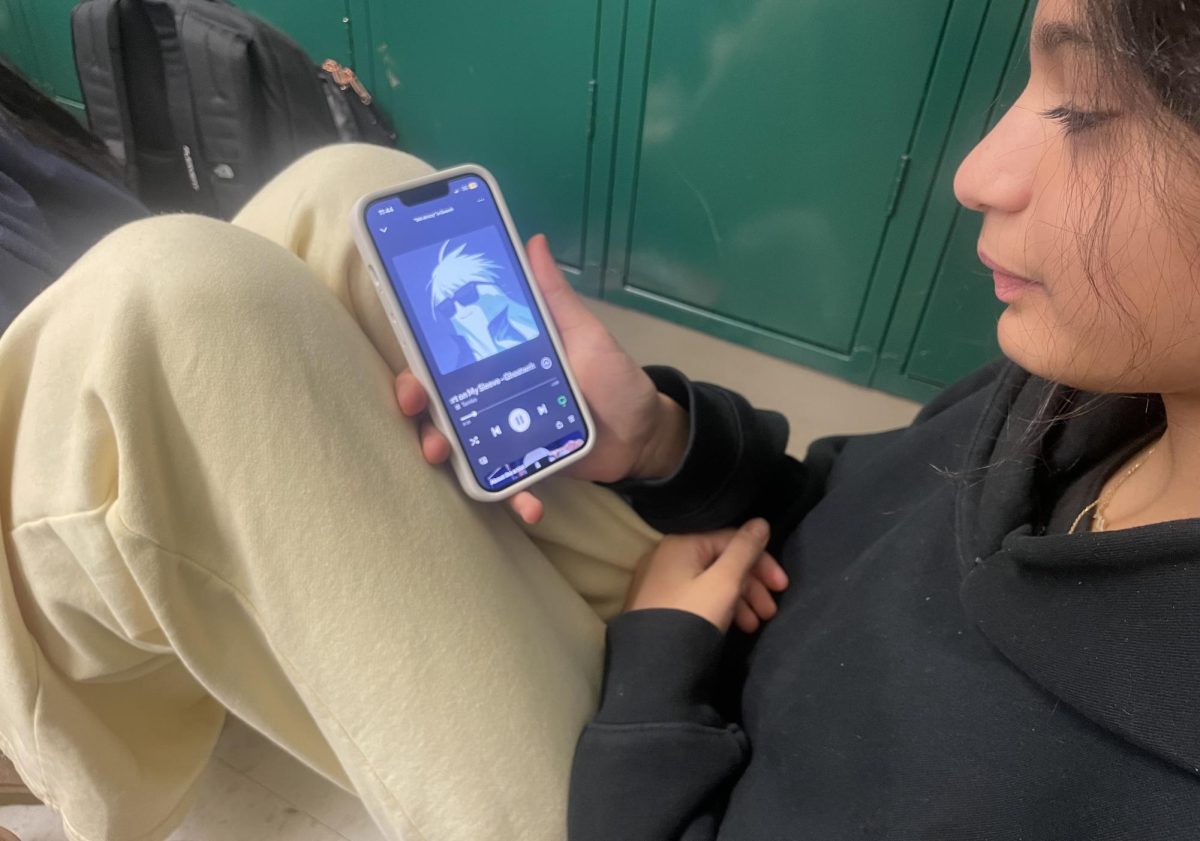
It is easy to “doomscroll” past hundreds of videos on social media without considering where the music, an element in almost every post, originates from. Music generated by artificial intelligence is rising in social media culture, mimicking the qualities of professional and successful artists. Some prominent songs include “Heart on My Sleeve” by an anonymous TikTok user and “I Run,” a catchy techno-pop song by HAVEN that climbed onto the Billboard Canadian Hot 100, reaching Position 45 in December 2025. Amidst AI-generated musics’ rise, a question among listeners and producers has emerged: should music be valued for how it sounds, or how it is made?
“Music is my connection to the world and my soul passion,” WCHS freshman Rodas Belay said. “AI-generated music interferes with that because it makes it harder to get into the music industry, which is already hard enough to get into. There are a lot of people that want to be in the music industry, but not enough space to make everyone a star.”
For Belay, who has been singing and songwriting since she was 6 years old, the rise of AI in the music industry feels personal. She fears that AI-generated music will shrink opportunities for young aspiring artists. To her, music is a form of self-expression that is shaped by personal experiences. In her eyes, a computer cannot have a human experience. This can weaken the human connection of the song, making it feel robotic and phony. When Belay knows the context of why an artist created a song, it feels authentic and emotional.
“Music should truly come from someone’s experiences and feelings,” Belay said. “It is what brings people together because of its originality. An artificial intelligence does not know what it is like to lose a family member, to fall in love or to lose a friend. That is something that only humans could have experienced.”
However, not all students at WCHS see AI-generated music as a menace. For some people, music can be a form of personal entertainment that revolves around the audience, rather than the artist. Instead of focusing on who made the music, many focus on how catchy, entertaining or enjoyable the music is.
“It does not bother me if a song uses AI,” WCHS sophomore Cameron Michaels said. “To me, it is not about who made the song, [but] about how the beats and emotion of the song actually sound.”
Michaels values the appeal of music rather than the backstory and creator. She gravitates toward pop and country music, two styles that have become increasingly popular when it comes to AI-generated music. Michaels views AI simply as another tool to help enhance music. For her, AI is not a cheat code, but a way to make music more enjoyable for the audience.
“I do not feel that AI-generated music is very different from autotune,” Michaels said. “Autotune corrects how people’s voices sound to make them sound more appealing; I feel AI does the same. It tries to draw in audience[s] by using sounds that are familiar and that people usually are attracted to.”
Both Belay’s and Michaels’ perspectives are based on characteristics they look for when listening to music. Belay feels that AI-generated music hurts the music industry, especially for young artists. She also believes that AI-generated music is a threat towards emotional authenticity, because computers can never experience personal anecdotes. Michaels, however, prioritizes entertainment and appeal. Rather than music focusing on the creator and its backstory, she believes it should focus on the audience’s enjoyment. She views AI as a tool that can help enhance music rather than replace it.
“Although writing songs is hard and sometimes you have places where you do not know what to say or what melody to use, I personally would not use AI to help write my songs because it kills originality,” Belay said. “Otherwise, the music loses its meaning and its purpose.”
Ultimately, the AI-generated music debate is not entirely clear cut. Primarily, the debate comes down to what the audience prioritizes: who makes the music and its backstory, or its sound and appeal. AI-generated music is a new element in the music industry; many people are still adjusting to its introduction. Social media apps will continue to escalate its introduction as more songs go viral and start to trend. As AI-generated music continues to make its rise in the media, it will continue to spark more debates, specifically between listeners and creators.
“I can understand why someone on the other side of the AI music debate feels the way they do,” Michaels said. “The music is not actually made by humans and that may feel strange to some people. Even if I do not agree with them, I still understand their point.”