
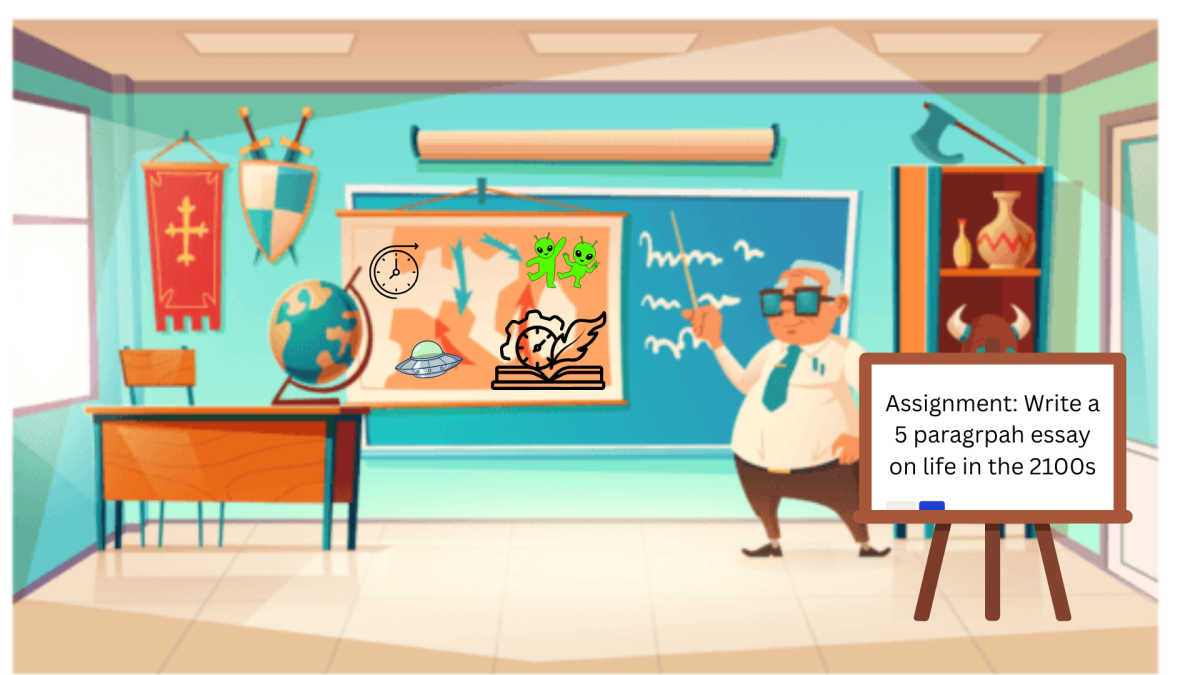
WCHS is known to offer some of the most difficult history courses, including AP U.S. History, AP World and AP European History. But WCHS social studies teachers have deemed that teaching history on the past is out, and instead, they will now have the class predict the future.
“The entire social studies department collectively decided at the beginning of semester two that we should stop teaching history of the past,” WCHS social studies teacher Michelle Futatorian said. “It just got really boring teaching the same old information every single year, so mixing it up was the best way to keep both teachers and students on their toes.”
It is hardly talked about that teachers can easily get bored teaching the same subjects year after year. Especially when it comes to history where the past doesn’t change, WCHS teachers took this problem into their own hands by creating lesson plans based on using what has already happened in the past, and using that to predict what will happen next.
“We started off by just predicting what will happen in the next 15 years, so in 2041,” WCHS freshman Doobuous McDubous said. “The tests are quite difficult, but us students have found that you just have to get creative in your responses in order to do well.”
Many of the tests involve short writing responses and drawing what our future world will look like. Whether that would entail flying cars or bubble houses, students must diligently allocate their time to ensure that there is adequate detail in both their writing and drawings.
“We definitely score our students harshly compared to our previous grading,” Futatorian said. “But honestly it’s because none of us have a true reference point so it’s just how believable the students make it.”
These history classes have been a true challenge for WCHS students. After a few months of this new approach, students are divided into two groups: loving the challenge or hating the challenge.
“Although I know some other students are not a huge fan of this new approach, I think it is important that everyone gets this experience,” McDubous said. “It really allows us to think outside of the box and use our imaginations unlike we have since we were young.”